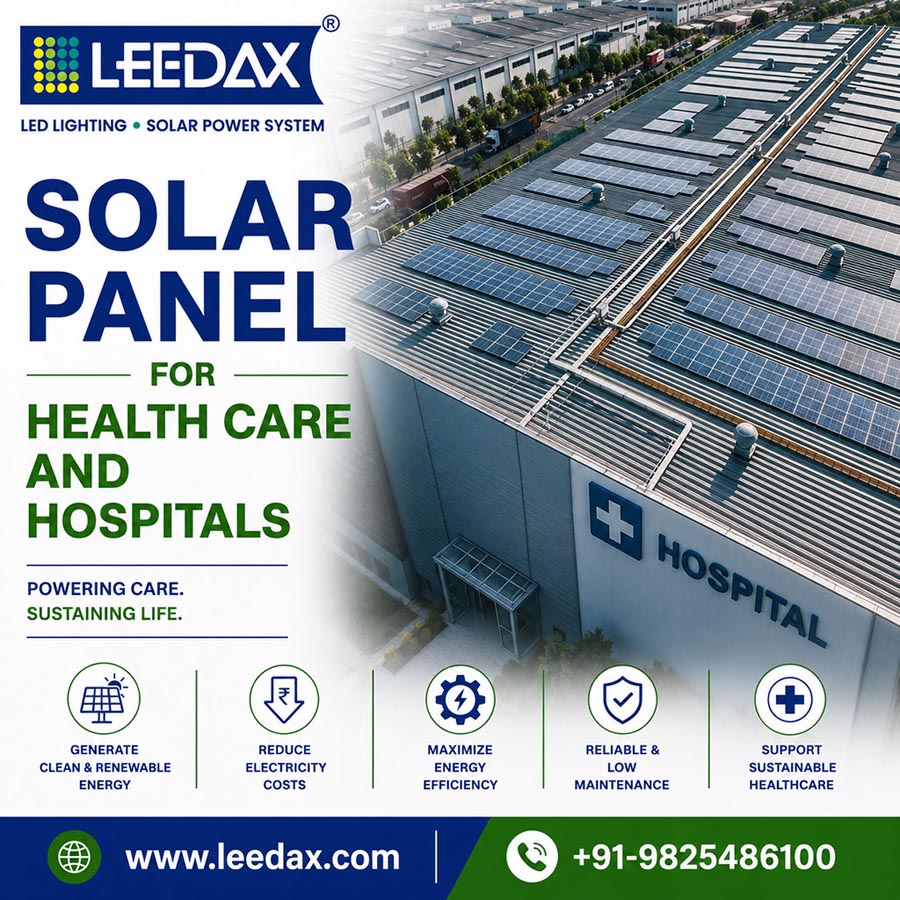
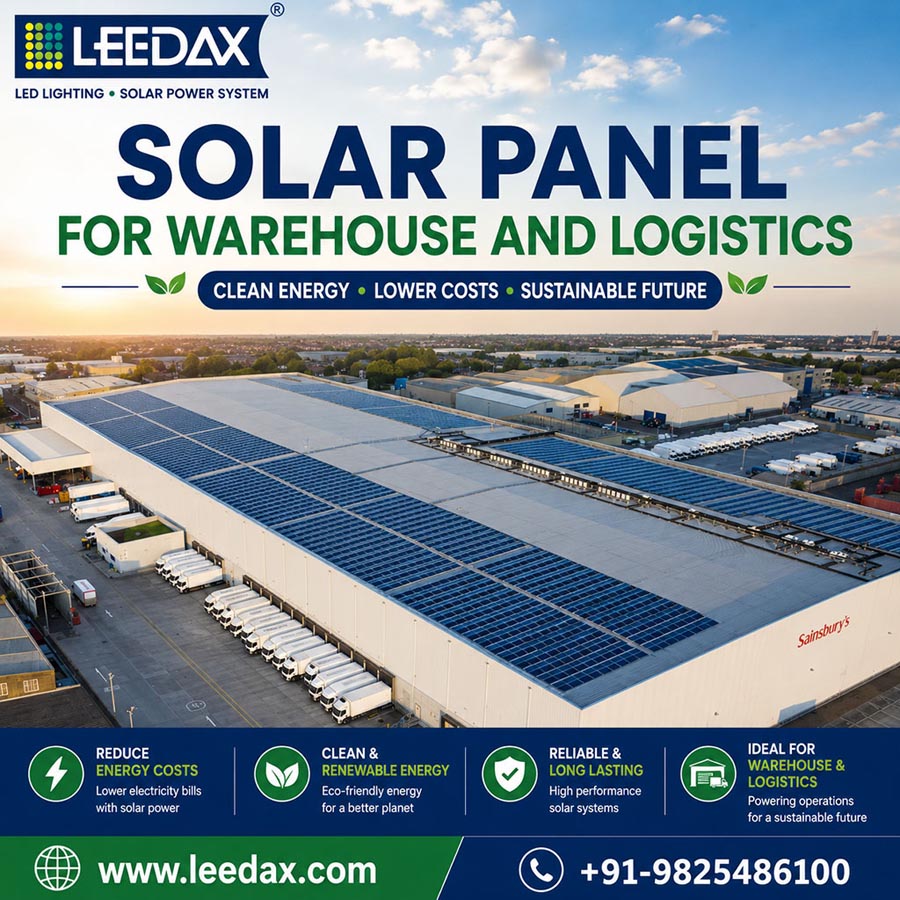
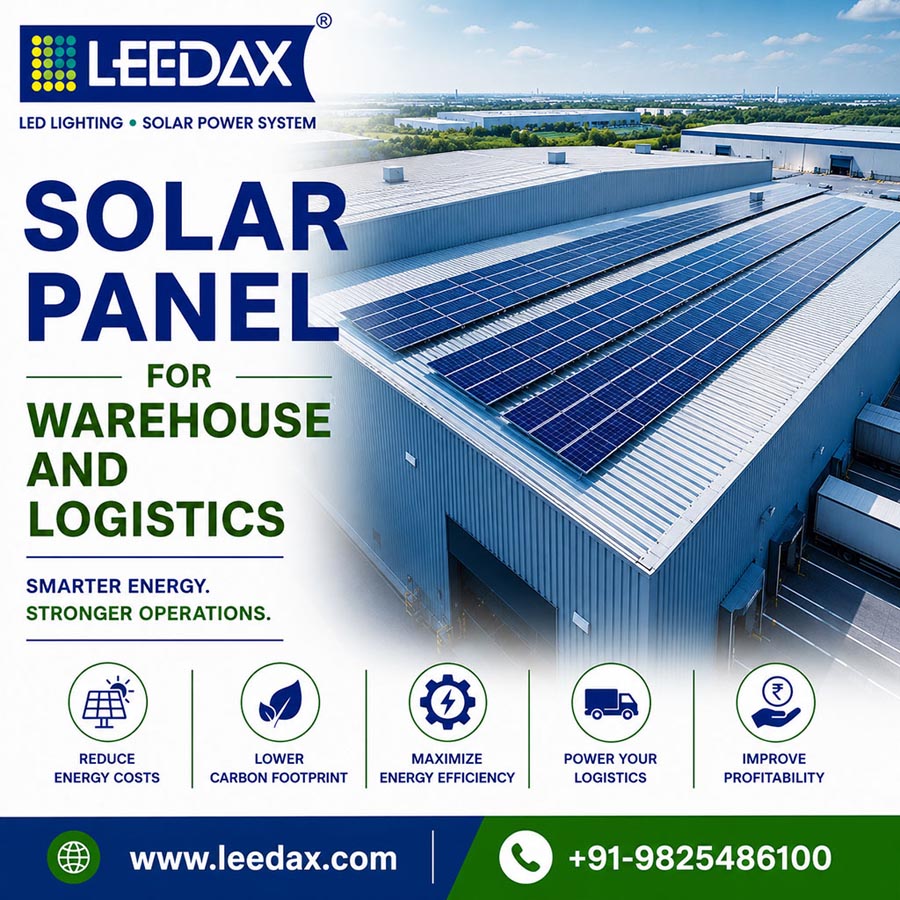
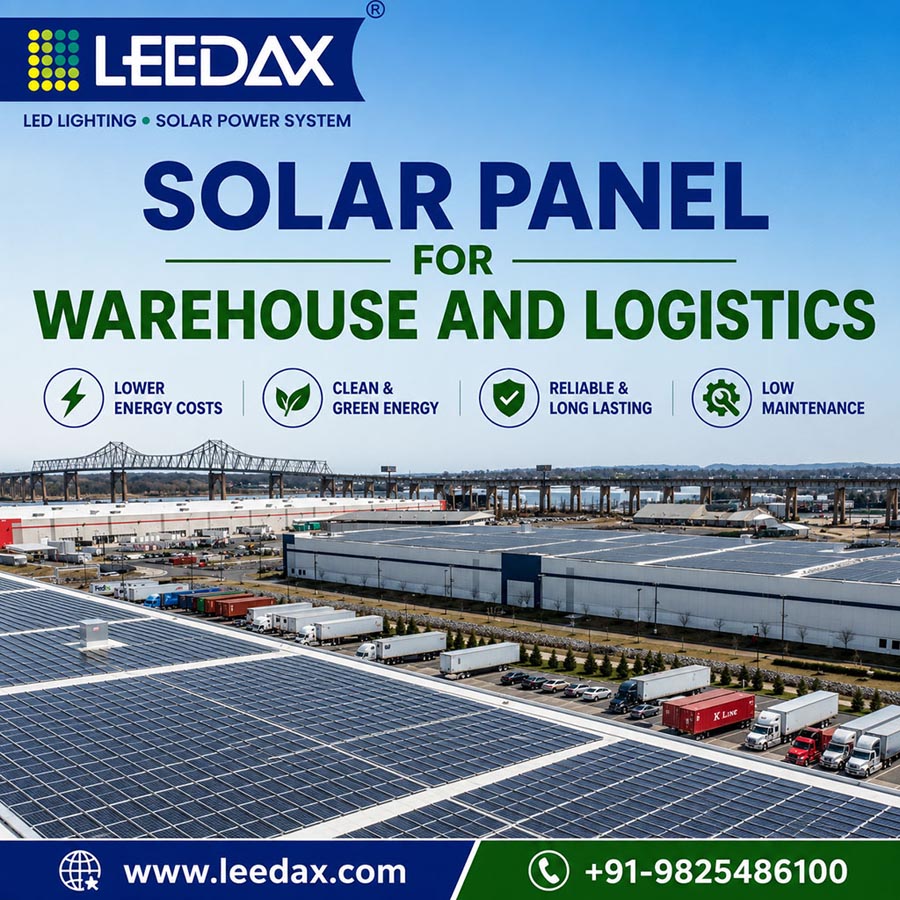
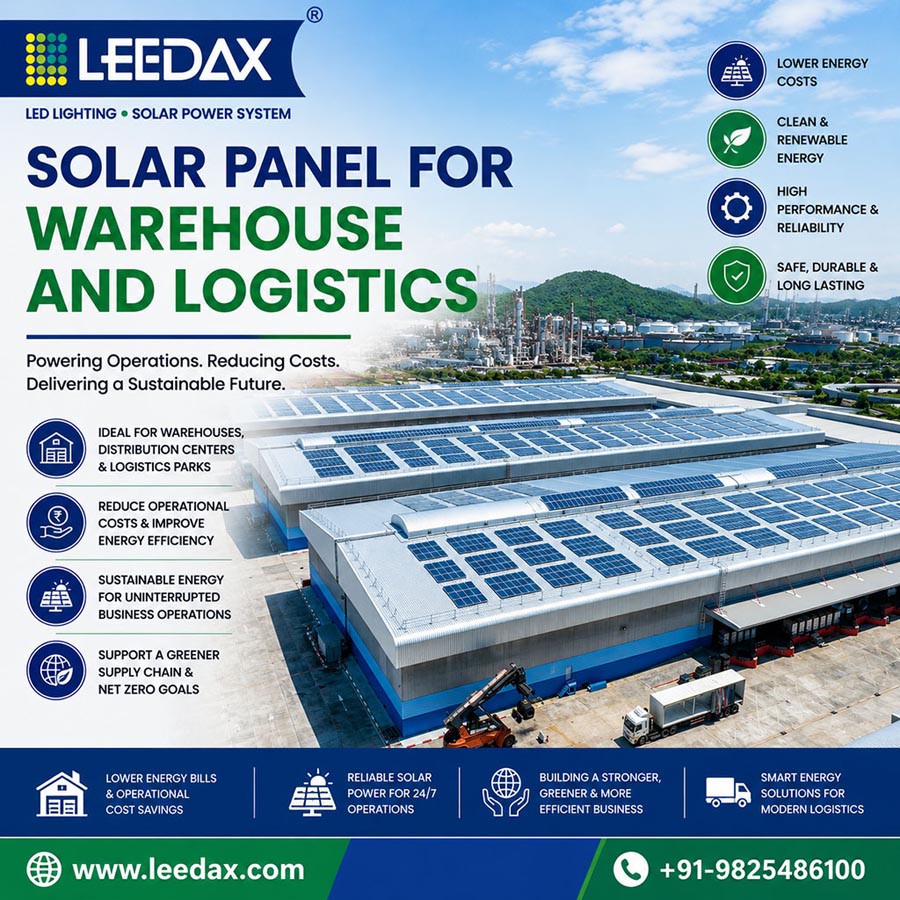
Warehouses and logistics facilities typically have large roof areas, substantial daytime electricity consumption and extensive operational infrastructure, making them highly suitable for solar panels for warehouses and logistics facilities. Installing a professionally designed rooftop solar system can transform unused warehouse roof space into a productive renewable energy asset while helping businesses manage their long-term electricity requirements.
Modern warehouses, distribution centers and logistics parks consume electricity for lighting, ventilation, air conditioning, material handling equipment, conveyor systems, security systems, IT infrastructure, refrigeration and administrative operations. A solar power system for warehouses can generate clean electricity during daylight hours and help offset a portion of the facility’s conventional electricity consumption.
LEEDAX provides customized warehouse solar solutions and logistics solar EPC services, covering site survey, feasibility assessment, engineering, solar module selection, inverter selection, mounting structures, electrical installation, protection systems, testing and commissioning.
A warehouse rooftop solar system can be designed according to available roof area, electricity consumption, roof structure, shading conditions, electrical infrastructure and applicable regulations. For large logistics facilities, distribution centers and fulfillment centers, rooftop solar can provide an efficient way to utilize extensive roof space without requiring additional land.
Depending on project requirements, solar panels can also be installed on suitable parking structures through solar carport systems or on available ground areas.
LEEDAX focuses on developing reliable commercial solar power systems for warehouses and logistics facilities, with an emphasis on higher solar generation, energy efficiency, electrical safety, long-term reliability and professional project execution.
Whether you operate a standalone warehouse, distribution center, cold storage facility, logistics park or large e-commerce fulfillment center, LEEDAX can develop a customized solar EPC solution for your warehouse or logistics facility.
| Application | Warehouses / Logistics Facilities / Distribution Centers |
| System Type | Grid-Connected / On-Grid Solar System |
| Solar Module Technology | High-Efficiency Mono / TOPCon / Latest Available Technology |
| Solar Module Capacity | As per Project-Specific Design |
| Solar Inverter | Grid-Connected String / Central Inverter |
| Installation Type | Rooftop / Carport / Ground Mounted where applicable |
| Mounting Structure | Engineered GI / Hot-Dip Galvanized Structure |
| DC Cabling | UV-Resistant Solar DC Cable |
| AC Cabling | Suitable LT / HT Grade Power Cable |
| DC Protection | DCDB / Isolator / SPD / String Protection as Applicable |
| AC Protection | ACDB / MCCB / ACB / SPD as Applicable |
| Earthing System | Equipment & Electrical Earthing as per Design |
| Lightning Protection | Lightning Arrestor / Protection System as Required |
| Solar Monitoring | Online Solar Plant Monitoring |
| Installation Scope | Engineering, Supply, Installation, Testing & Commissioning |
A professionally designed warehouse rooftop solar system can address the unique energy requirements and large installation areas associated with logistics and warehousing facilities.
High-Efficiency Solar Panels
High-efficiency solar modules enable warehouses to generate more renewable electricity from available roof space.
Mono and TOPCon solar panels can be considered based on project requirements, availability and technical specifications.
Large Rooftop Utilization
Warehouses and distribution centers often have extensive roof areas.
Solar PV systems can utilize suitable shadow-free sections of these rooftops to generate renewable electricity without occupying additional land.
Customized Solar System Design
LEEDAX develops warehouse solar solutions based on electricity consumption, roof dimensions, orientation, shading, structural conditions, operating patterns and electrical infrastructure.
Advanced Solar Inverters
Appropriate grid-connected solar inverters can be selected according to the system capacity and electrical architecture.
Proper inverter configuration helps optimize conversion of solar DC electricity into usable AC power.
Robust Mounting Structures
Engineered mounting structures provide secure installation of solar modules while considering roof type, wind conditions, loading requirements and site-specific structural considerations.
Comprehensive Electrical Protection
The system can incorporate AC and DC protection equipment, surge protection devices, isolators, earthing and lightning protection to support safe and reliable operation.
Online Solar Monitoring
Solar monitoring enables warehouse and facility management teams to track electricity generation and system performance through daily, monthly and cumulative generation data.
Complete Solar EPC Execution
LEEDAX can undertake the complete Solar EPC for warehouses and logistics facilities, including engineering, procurement, installation, testing and commissioning.
Flexible Installation Options
Depending on available space, solar panels can be installed on rooftops, parking structures or suitable ground-mounted areas, providing flexibility for large logistics projects.
Installing solar panels for warehouses and logistics facilities can provide financial, operational and environmental benefits when the system is properly designed according to the facility’s electricity requirements.
Potential Reduction in Electricity Costs
Solar electricity generated at the warehouse can offset a portion of electricity purchased from the grid.
The actual savings depend on solar plant capacity, generation, electricity tariff, consumption profile and applicable regulations.
Productive Use of Large Roof Areas
Warehouses typically have large, relatively open rooftops.
Installing a warehouse rooftop solar system converts otherwise underutilized roof space into a renewable energy-generating asset.
Reduced Dependence on Conventional Electricity
On-site solar generation allows logistics facilities and distribution centers to generate renewable electricity at their premises, reducing dependence on conventional grid power for eligible loads.
Suitable for Daytime Operations
Warehouses, distribution centers and logistics facilities commonly operate during daylight hours.
This can create a useful alignment between solar generation and electricity consumption.
Better Energy Cost Management
Solar energy can help businesses manage a portion of their long-term electricity requirements and improve energy planning for large warehouse and logistics operations.
Supports Sustainable Logistics
Companies operating logistics networks are increasingly focused on reducing the environmental impact of their facilities.
Renewable energy from solar panels for logistics centers can contribute to broader sustainability initiatives.
Clean Renewable Energy
Solar power provides renewable electricity without direct fuel combustion during operation.
It can help businesses increase their share of renewable energy consumption.
Supports Green Building Objectives
Solar installations can contribute to energy-efficiency and renewable-energy objectives for warehouses, logistics parks and commercial buildings, subject to applicable certification requirements.
Long-Term Renewable Energy Asset
A professionally engineered and maintained solar plant can provide renewable electricity generation over a long operating period, making it a strategic energy investment for warehouse owners and logistics operators.
Solar panels for warehouses and logistics can be deployed across a wide range of storage, distribution and supply-chain facilities. The solar system can be customized according to facility size, electricity consumption and available installation area.
Warehouses
Large standalone warehouses can utilize rooftop solar panels to generate renewable electricity for lighting, ventilation, material handling equipment, security systems and other eligible facility loads.
Distribution Centers
Large distribution centers often have extensive rooftops and substantial electricity requirements.
Solar power systems for distribution centers can help utilize these facilities as renewable energy generation sites.
Logistics Parks
Large logistics parks containing multiple warehouses and commercial facilities can consider centralized or building-specific rooftop solar installations depending on electrical infrastructure and project requirements.
E-Commerce Fulfillment Centers
E-commerce fulfillment centers generally have significant lighting, automation, conveyor, sorting, IT and material-handling loads.
Rooftop solar can help offset part of their electricity requirements.
Cold Storage Warehouses
Cold storage facilities have substantial electricity consumption from refrigeration and temperature-control systems.
Solar power can form an important component of their energy-management strategy.
Industrial Warehouses
Warehouses attached to manufacturing and industrial facilities can use solar energy to supplement the electricity requirements of storage and operational areas.
Logistics Hubs
Regional and national logistics hubs can utilize large rooftop areas for commercial solar installations, subject to structural and electrical feasibility.
Transportation & Fleet Facilities
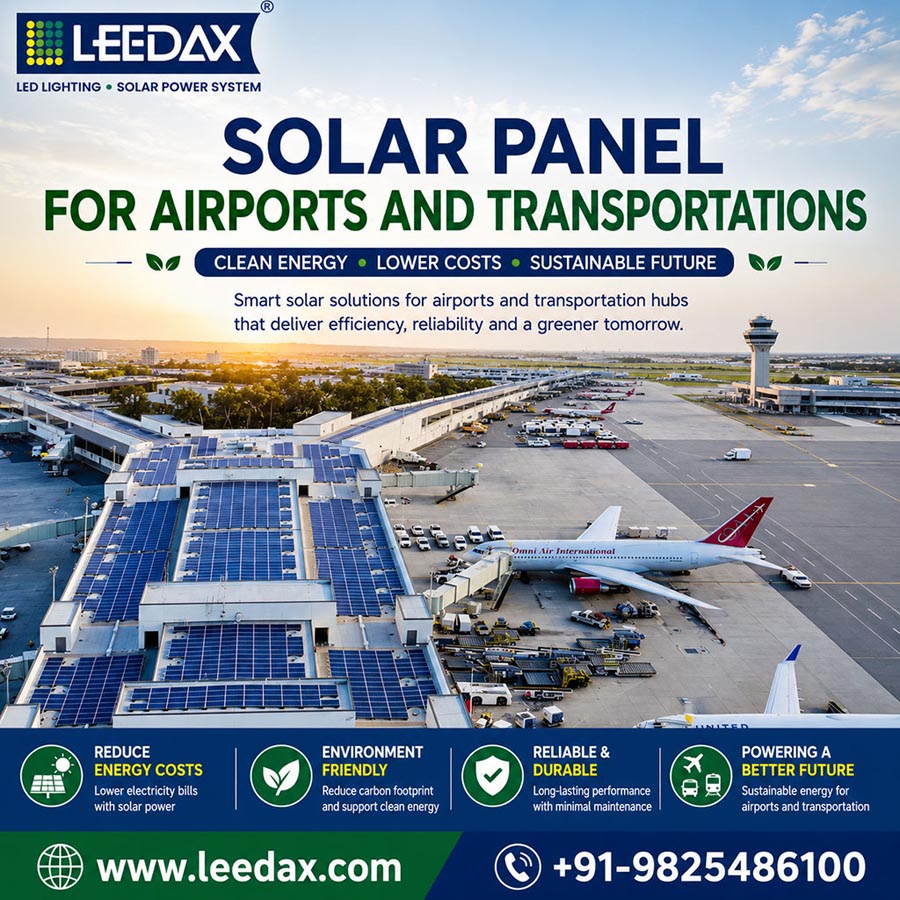
Warehouses and logistics centers associated with transportation fleets can consider rooftop or solar carport systems for renewable energy generation.
Retail Distribution Warehouses
Large retail chains operating centralized distribution warehouses can deploy solar systems to support their renewable-energy and sustainability objectives.
Packaging & Fulfillment Facilities
Packaging, sorting and fulfillment centers can utilize solar power for production-support equipment, lighting, HVAC, automation and other electrical requirements.

ISO 9001:2008 Certified Manufacturing Organization specializing in next-gen LED lighting solutions for modern global industries.
Copyright © 2026 Leedax. All rights reserved.
Website Designed & Developed by Opti Matrix