Solar Panel for Agriculture and Food Business

Solar Panel for Agriculture and Food Business

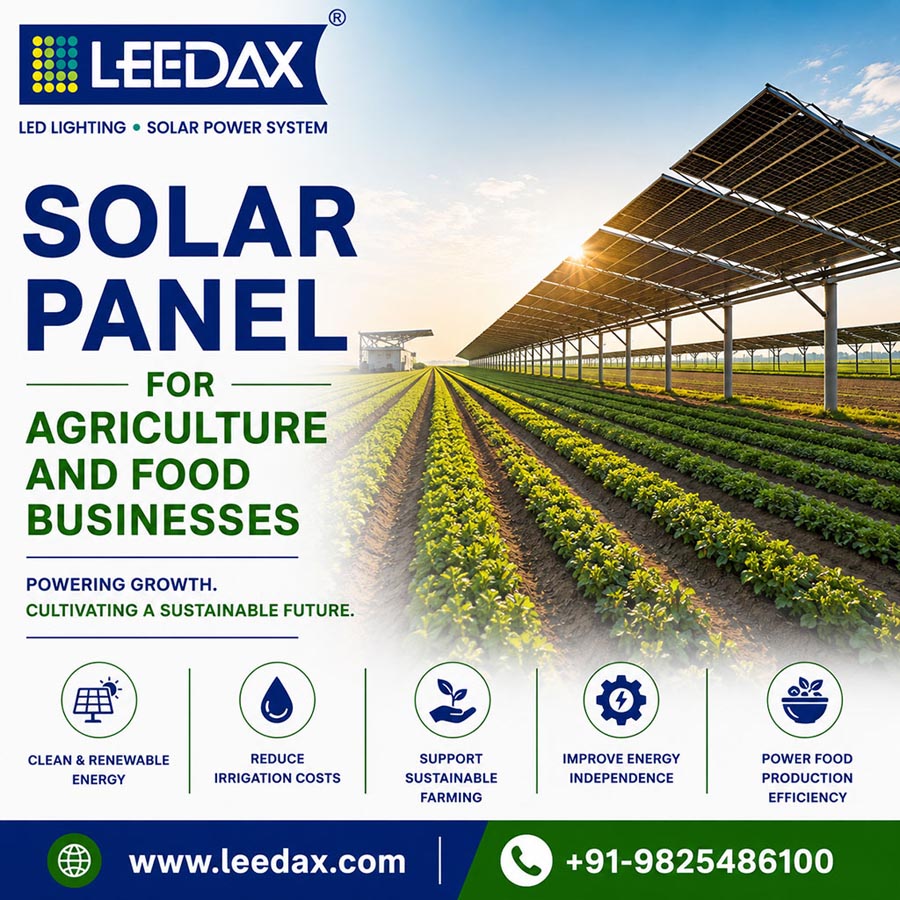
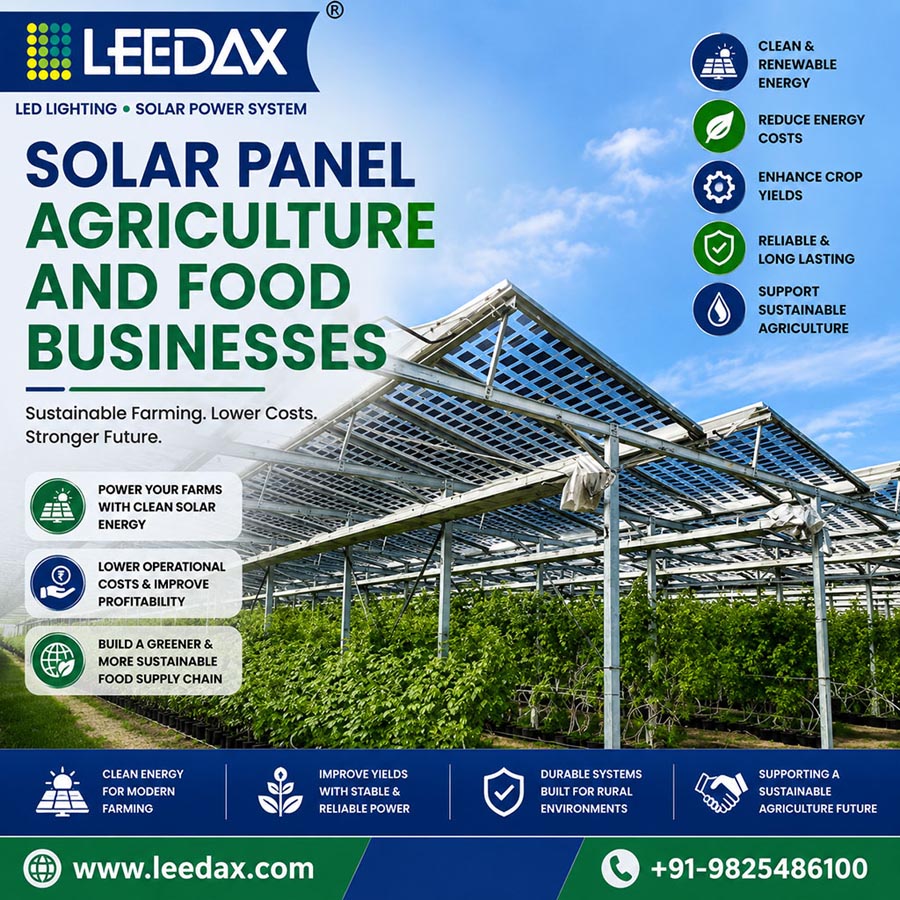
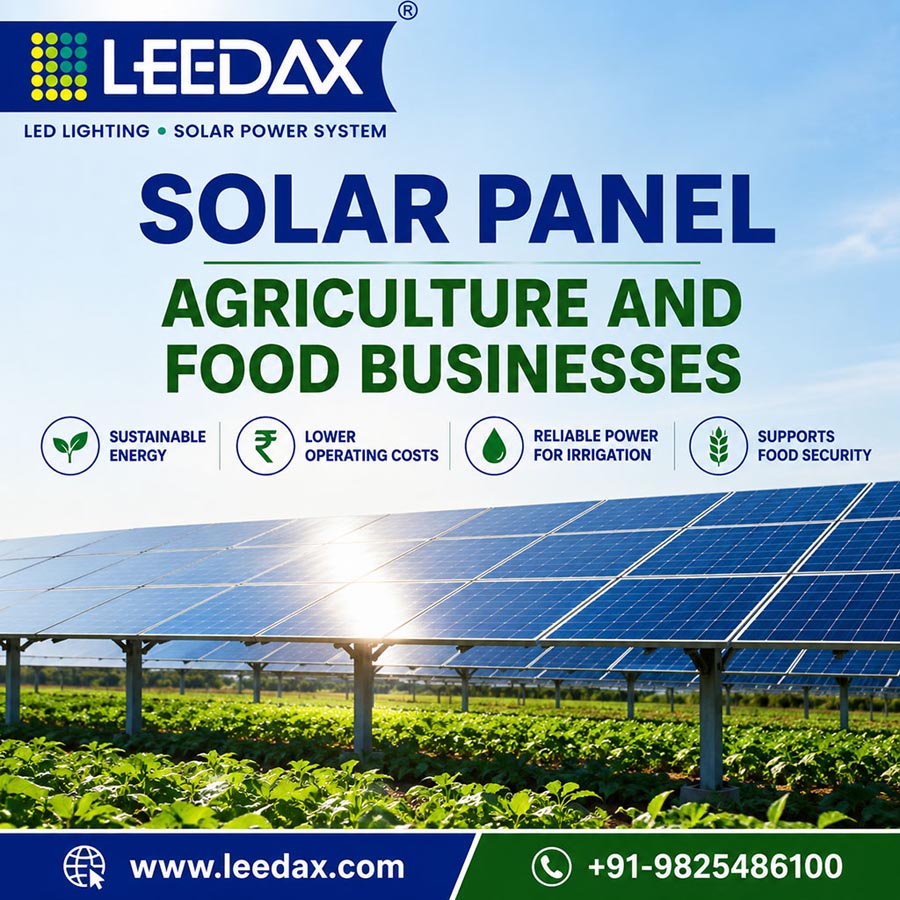
Agriculture and food businesses are increasingly looking for reliable and cost-effective ways to manage their growing energy requirements. From agricultural farms, dairy units and cold storage facilities to food processing plants, warehouses, mills, poultry farms and irrigation systems, electricity is an essential part of daily operations. Solar panels for agriculture and food businesses provide an efficient solution to reduce electricity costs while supporting cleaner and more sustainable business operations.

Solar energy can be used to power irrigation pumps, agricultural machinery, milk chilling systems, cold storage, refrigeration, processing equipment, ventilation systems, lighting, packaging machinery and other electrical loads. By installing a properly designed solar power system for agriculture, businesses can generate electricity from their own premises and reduce their dependence on conventional grid power.

For food processing and agricultural businesses with large rooftops, solar rooftop systems can convert otherwise unused roof space into a productive energy-generating asset. Ground-mounted solar power plants can also be considered where sufficient land is available. Depending on the site’s electricity requirement and operating pattern, both grid-connected and other suitable solar configurations can be evaluated.

A professionally designed solar power plant for farms and food businesses can deliver long-term energy savings, improve control over electricity expenses and contribute towards environmental sustainability. Solar power is particularly attractive for businesses with significant daytime electricity consumption because solar generation can coincide with their operational requirements.

LEEDAX provides solar EPC solutions for agriculture, food processing and commercial applications, covering system design, engineering, procurement, installation and commissioning. With the right solar system size, high-quality components and proper engineering, agricultural and food businesses can make better use of renewable energy while building a more energy-efficient and sustainable operation.

Solar System Type Grid-Connected / On-Grid Solar Power System
Solar Module Technology Mono Crystalline / High-Efficiency Solar Modules
Solar Module Capacity As per project design and available area
System Capacity From small agricultural systems to large commercial & industrial plants
Solar Inverter String / Central Inverter as per system capacity
Mounting Structure Hot-Dip Galvanized / Suitable Corrosion-Resistant Structure
Installation Type Rooftop / Ground Mounted / Suitable Agricultural Installation
DC Cabling UV-resistant, Solar DC Cable suitable for outdoor installation
AC Cabling Suitable copper/aluminium power cables as per design
Protection System DCDB, ACDB, SPD, MCB/MCCB and required electrical protection
Earthing Equipment & system earthing as per applicable electrical standards
Lightning Protection Lightning Arrestor wherever required by site design
Monitoring Solar Generation & System Performance Monitoring
Energy Metering Generation / Import-Export Metering as applicable
System Design Customized according to load, electricity consumption and site conditions
  • Solar panels for agriculture and food businesses can be customized according to the energy consumption, available installation area and operating requirements of each facility. One of the key features is the flexibility of installation. Solar systems can be installed on the rooftops of food processing units, warehouses, dairy facilities and agricultural buildings, or as ground-mounted solar power plants where suitable land is available.
  • High-efficiency mono crystalline solar panels can help maximize electricity generation from the available installation area. The system can be designed according to the actual energy consumption profile of the business, allowing agricultural and food-processing companies to select an appropriate solar plant capacity.
  • Another important feature is compatibility with different agricultural and commercial applications. Solar electricity can support irrigation pumps, refrigeration equipment, cold storage, processing machinery, lighting, ventilation, packaging systems and other electrical loads.
  • Modern solar inverters provide efficient conversion of DC electricity generated by the solar panels into usable AC electricity. Advanced monitoring systems can also provide information regarding solar generation and system performance, helping businesses track the output of their solar power plant.
  • Solar mounting structures are engineered according to the selected installation location, roof characteristics, wind conditions and project requirements. Proper electrical protection, earthing, surge protection and cable management are incorporated to improve system safety and reliability.
  • For food businesses, where uninterrupted and predictable operations are important, solar can form an important part of an overall energy-management strategy. The system can be designed around the business’s daytime electricity consumption to maximize the utilization of generated solar power.
  • LEEDAX can provide customized solar EPC solutions for farms, agricultural facilities, food processing industries, cold storage units, dairies and commercial establishments, from initial assessment and system design through procurement, installation and commissioning.
  • Installing solar panels for agriculture and food businesses can provide significant financial and operational advantages over the long term. The primary benefit is the potential reduction in electricity expenditure. Agricultural facilities and food businesses often operate energy-intensive equipment such as irrigation pumps, refrigeration systems, cold storage, motors, processing machinery and cooling systems. Generating a portion of this electricity through solar power can reduce dependence on conventional grid electricity.
  • Solar energy also provides businesses with greater control over their long-term energy costs. Instead of depending entirely on grid electricity and future tariff increases, businesses can generate electricity from their own solar installation. This can improve the predictability of operating expenses and support long-term financial planning.
  • For agricultural businesses, solar power can be particularly useful for irrigation and farm-related electrical requirements. Solar electricity can support pumps and other agricultural equipment while helping farmers and agri-businesses make better use of renewable energy.
  • Food processing businesses can benefit from utilizing available rooftop areas for solar generation. Large factories, warehouses, cold storage facilities and processing units frequently have substantial roof areas that can be converted into productive solar assets.
  • Another major benefit is environmental sustainability. Solar power generates electricity without direct combustion-based emissions during operation. Businesses adopting renewable energy can therefore reduce their dependence on conventional energy sources and contribute towards their sustainability objectives.
  • Solar installations can also strengthen a company’s green credentials. Food and agriculture businesses increasingly operate within supply chains where sustainability and responsible energy consumption are becoming important considerations.
  • With professional engineering, quality components, appropriate system sizing and regular monitoring, a commercial or industrial solar rooftop system can become a valuable long-term energy asset for agricultural and food businesses.
  • Solar panels for agriculture can be used across a wide range of agricultural and food-related applications. Agricultural farms can install solar systems to support irrigation pumps, water pumping systems, farm buildings, equipment, lighting and other electrical requirements. Depending on the project configuration, solar power can help reduce electricity consumption associated with routine farming operations.
  • Dairy farms and milk processing facilities are another important application area. Electricity is required for milk chilling, refrigeration, water pumping, ventilation, lighting and other dairy operations. A suitably designed solar power system for dairy farms can help offset a portion of this electricity consumption.
  • Food processing industries can use solar power for machinery, motors, refrigeration, processing lines, packaging equipment, lighting and ventilation. Facilities such as flour mills, rice mills, spice-processing units, grain-processing plants, edible-oil units and other food manufacturing businesses can evaluate solar as part of their energy strategy.
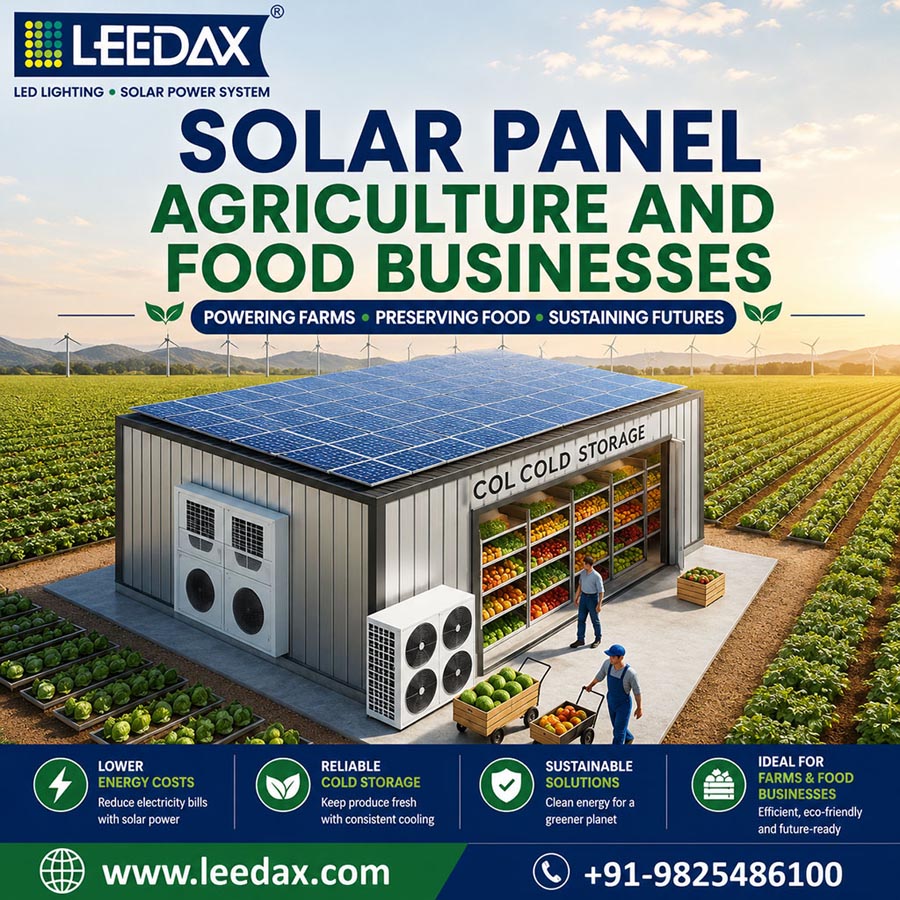
  • Cold storage and refrigerated warehouses can also benefit from solar energy because refrigeration systems can represent a significant portion of electricity consumption. A rooftop or ground-mounted solar power plant for cold storage can help generate renewable electricity during daylight hours.
  • Solar can also be deployed for agricultural warehouses, farmhouses, poultry farms, greenhouses, horticulture facilities, seed-processing units and agri-logistics centres.
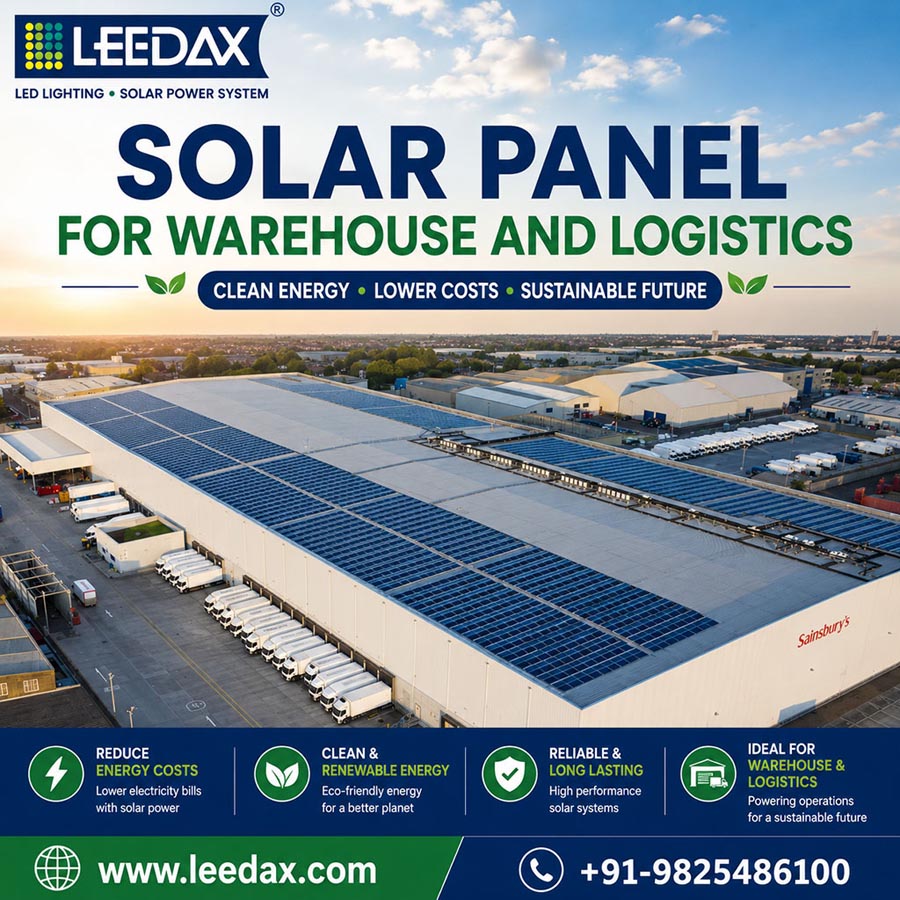
  • For larger facilities, industrial solar rooftop systems can be designed based on the electricity consumption profile and available roof area. Where adequate roof space is unavailable, ground-mounted solar installations may provide an alternative.
  • Whether the requirement is a small solar system for an agricultural facility or a large solar EPC project for a food processing plant, proper site assessment and engineering are essential for determining the appropriate system configuration, capacity and installation method.


Typical Applications Include:

  • Agricultural farms and farmhouses
  • Irrigation and agricultural water pumping
  • Dairy farms and milk processing units
  • Food processing industries
  • Cold storage and refrigerated warehouses
  • Grain, rice and flour mills
  • Spice and food manufacturing units
  • Poultry farms and livestock facilities
  • Greenhouses and horticulture facilities
  • Agricultural warehouses and storage facilities
  • Food packaging and processing units
  • Agri-logistics and distribution centres
  • Commercial food warehouses
  • Farm-based processing facilities
  • Large-scale agricultural and food businesses
Solar Panel for Commercial And Industrial Premises

Other Products