Utility Scale Solar Pv Power Projects

Utility Scale Solar Pv Power Projects

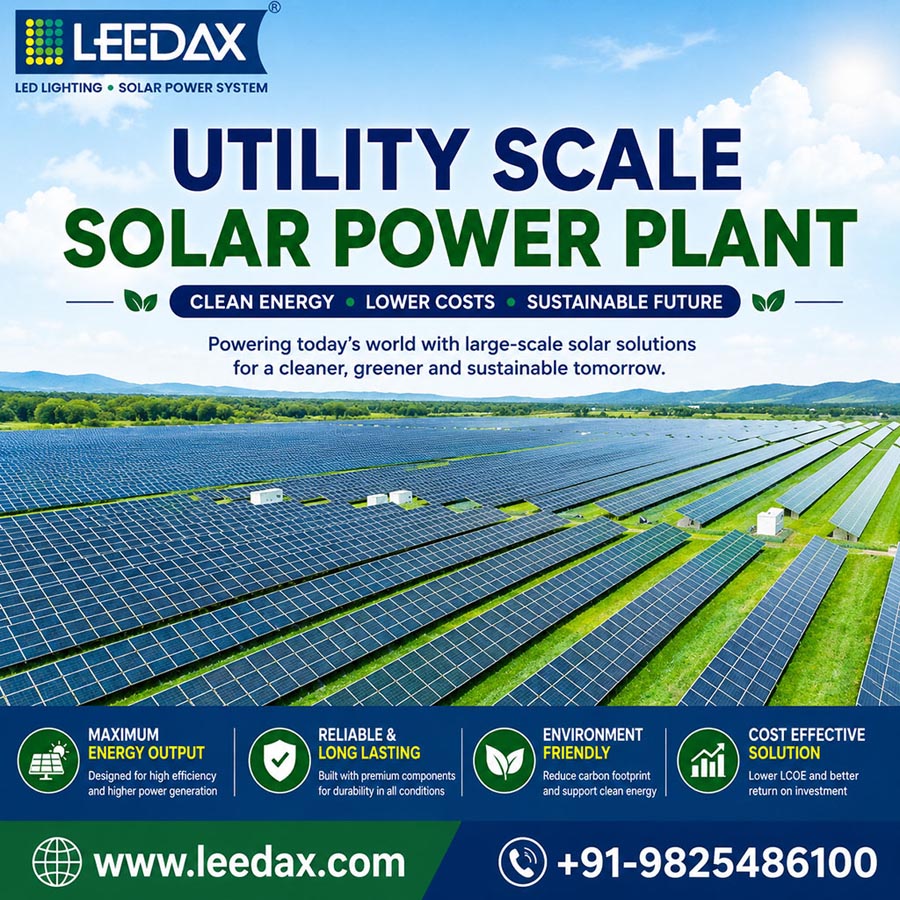
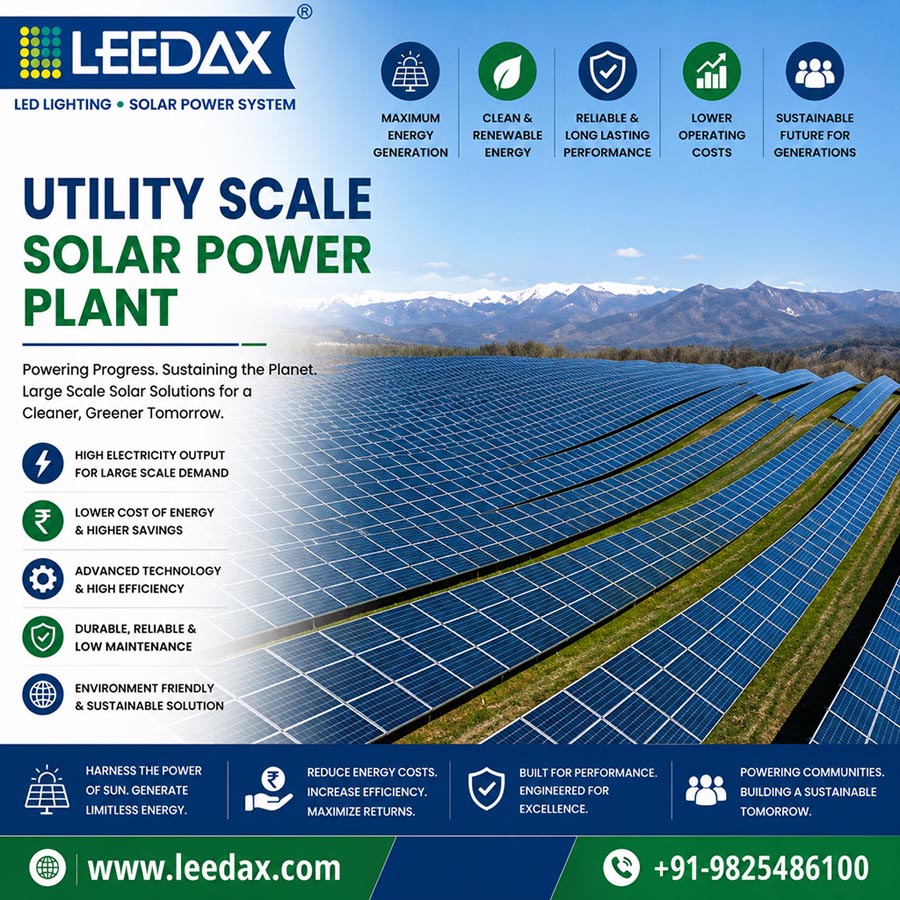
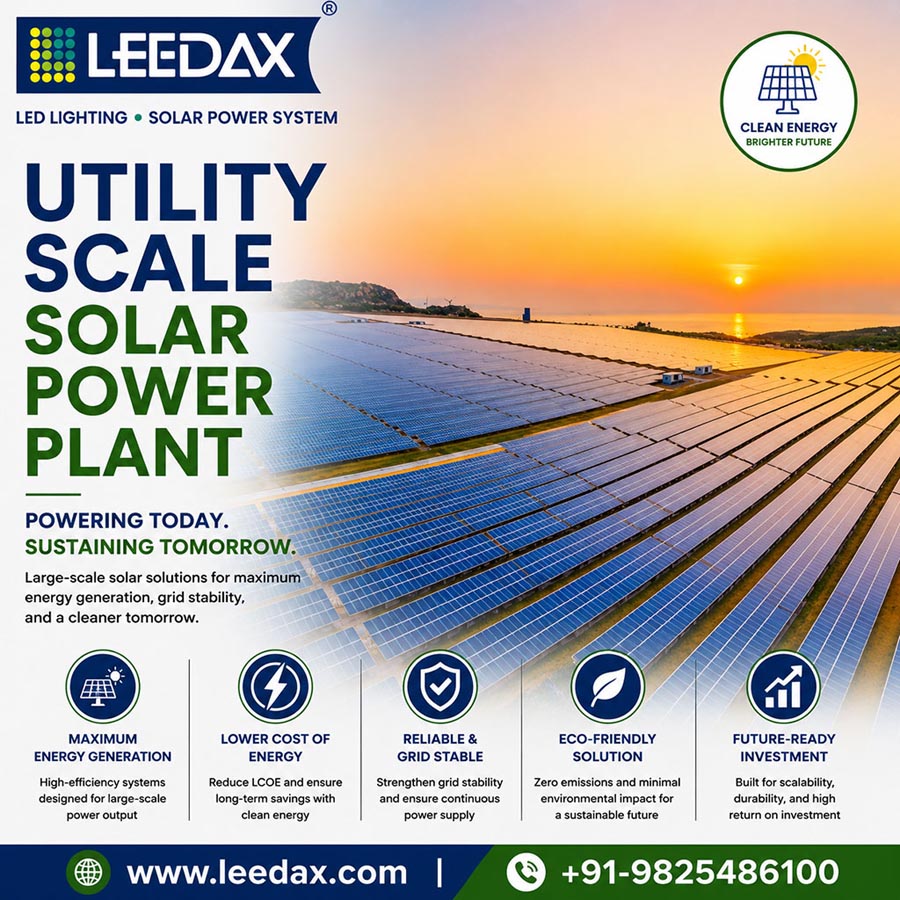
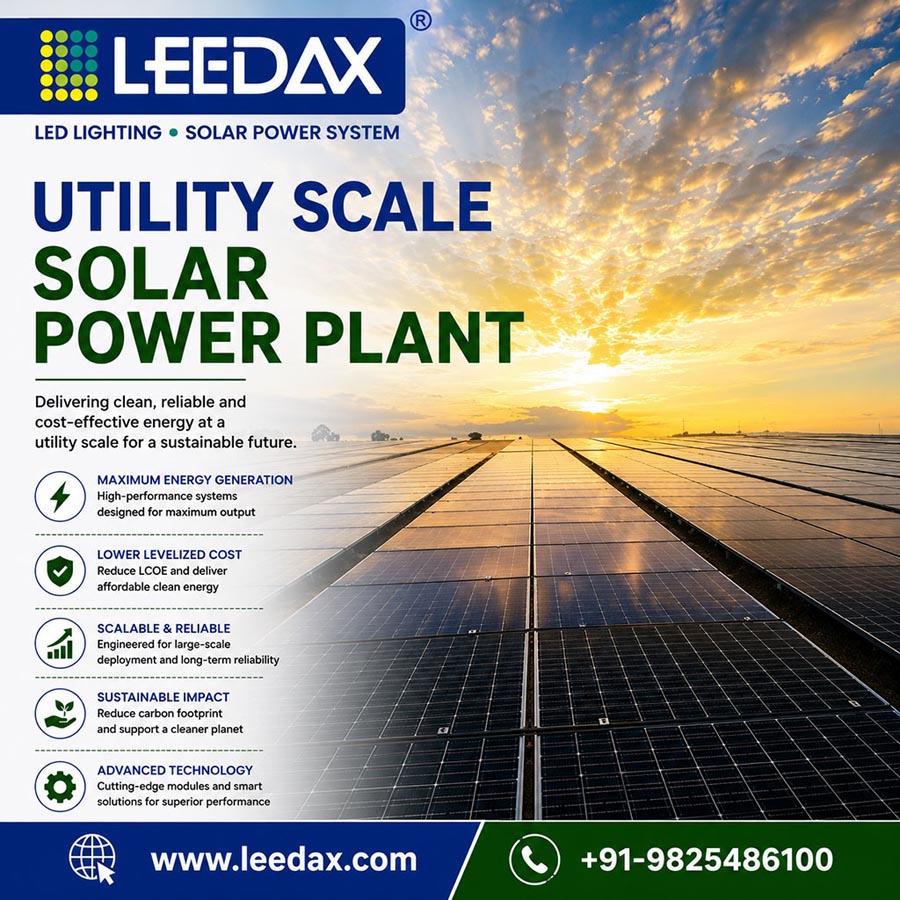
Utility-Scale Solar PV Projects are large-scale solar power generation systems designed to generate substantial quantities of renewable electricity for supply to the electrical grid, utilities, commercial entities or other large energy consumers. Unlike small rooftop solar installations, utility-scale solar projects typically involve extensive ground-mounted solar arrays, high-capacity inverters, sophisticated electrical infrastructure and dedicated grid-interconnection systems.

As the demand for clean and renewable electricity continues to increase, large-scale solar power plants have become an important component of modern energy infrastructure. Utility-scale solar PV projects can be developed across suitable land parcels with high solar irradiation and appropriate grid connectivity. These projects can range from several megawatts to hundreds of megawatts, depending on land availability, grid capacity, project economics and applicable regulations.

A professionally engineered utility-scale solar power plant involves several critical stages, including site assessment, solar resource analysis, land evaluation, topographical and geotechnical studies, plant design, engineering, procurement, construction, grid interconnection and commissioning. The selection of high-efficiency PV modules, reliable inverters, robust mounting structures and appropriate electrical equipment is essential for achieving long-term plant performance.

Ground-mounted solar PV systems can utilize fixed-tilt structures or tracking technologies depending on project requirements and economic considerations. Advanced monitoring and SCADA systems enable operators to monitor generation, equipment performance and plant availability.

LEEDAX provides customized utility-scale solar EPC solutions, covering engineering, procurement, construction and commissioning of large-scale solar power projects. With proper planning, quality components and professional project execution, utility-scale solar PV projects can support reliable renewable electricity generation and contribute to the transition towards a cleaner and more sustainable energy system.

Project Type Utility-Scale Ground-Mounted Solar PV Power Plant
Project Capacity Typically several MW to hundreds of MW, as per project scope
Solar Module Technology High-Efficiency Mono Crystalline PV Modules
Module Configuration Series/Parallel String Configuration as per DC Design
Mounting System Fixed-Tilt / Single-Axis Tracking Structure
Solar Inverter Central / String Inverter Configuration
DC Voltage As per selected module and inverter architecture
AC Collection System LV / MV Collection System as per plant design
Transformer Step-Up Transformer as per Grid Interconnection Requirement
Grid Connectivity As per Approved Grid Interconnection Scheme
SCADA & Monitoring Plant-Level Monitoring, SCADA and Data Acquisition
Protection System Relays, Breakers, Surge Protection and Grid Protection
Earthing System Comprehensive Plant Earthing & Grounding Network
Lightning Protection Plant-Level Lightning Protection System
Project Engineering Site Survey, Topography, Geotechnical, Electrical & Detailed Engineering
  • Utility-scale solar PV projects are engineered for high-capacity renewable electricity generation and long-term plant operation. One of their primary features is large-scale ground-mounted deployment, allowing thousands of solar modules to be installed across suitable land areas.
  • High-efficiency solar PV modules can be configured into optimized strings and arrays to maximize energy generation. Depending on project economics, terrain and generation requirements, fixed-tilt structures or single-axis tracking systems can be considered.
  • Large-scale solar power plants utilize sophisticated inverter and electrical systems to convert the DC electricity generated by the PV modules into grid-compatible AC electricity. Medium-voltage collection systems, transformers, switchgear and protection equipment form an important part of the plant’s electrical infrastructure.
  • Utility-scale projects also require detailed engineering and site studies. Topographical surveys, geotechnical investigations, hydrological assessments, solar resource analysis, drainage planning and internal road layouts can be incorporated into project planning wherever required.
  • Advanced SCADA and solar plant monitoring systems allow operators to monitor power generation, inverter performance, equipment status, alarms and plant availability. This supports efficient plant operation and maintenance.
  • Robust mounting structures are designed according to site-specific wind conditions, soil characteristics and module configuration. Proper DC and AC cable routing, earthing, lightning protection and electrical safety systems are integrated into the overall plant design.
  • Grid integration is another critical feature. Utility-scale solar plants require appropriate grid-interconnection infrastructure, protection systems, metering and communication systems according to the requirements of the relevant utility or transmission authority.
  • LEEDAX can provide utility-scale solar EPC services covering project engineering, procurement, construction, installation, electrical works, testing and commissioning, helping project owners develop reliable large-scale solar generation assets.
  • Utility-scale solar PV projects offer significant advantages for renewable electricity generation and long-term energy infrastructure development. One of the primary benefits is the ability to generate electricity at a large scale from a renewable energy source. A single utility-scale solar power plant can generate substantial amounts of electricity for grid supply or other approved applications.
  • Solar power plants utilize sunlight as their energy resource, reducing dependence on conventional fossil-fuel-based electricity generation. This supports the transition towards cleaner and more sustainable energy systems.
  • Large-scale solar projects can also contribute to long-term energy diversification. Utilities, infrastructure developers, investors and large energy consumers can incorporate solar generation into broader renewable-energy portfolios, helping reduce dependence on a single energy source.
  • Another important advantage is scalability. Utility-scale solar projects can be developed in different capacities depending on land availability, grid infrastructure, project requirements and investment objectives. This makes large-scale solar PV suitable for a wide variety of renewable-energy development programs.
  • Solar plants generally have no fuel requirement during electricity generation, which simplifies the operating model compared with conventional fuel-based power generation. With appropriate operation and maintenance, a well-engineered solar plant can provide renewable electricity over a long project life.
  • Utility-scale solar development can also support the growth of renewable-energy infrastructure, create opportunities for local employment during construction and maintenance, and contribute to the development of clean-energy ecosystems.
  • Advanced monitoring and SCADA systems can further improve plant visibility and operational management by providing real-time information about generation and equipment performance.
  • For organizations seeking to develop large renewable-energy assets, a professionally designed large-scale solar power plant can provide a scalable solution for renewable electricity generation while supporting long-term sustainability objectives.
  • Utility-scale solar PV projects are primarily developed for large-scale electricity generation and grid-connected renewable-energy applications. These projects can be deployed by utilities, independent power producers, renewable-energy developers, infrastructure companies and other organizations involved in large-scale energy generation.
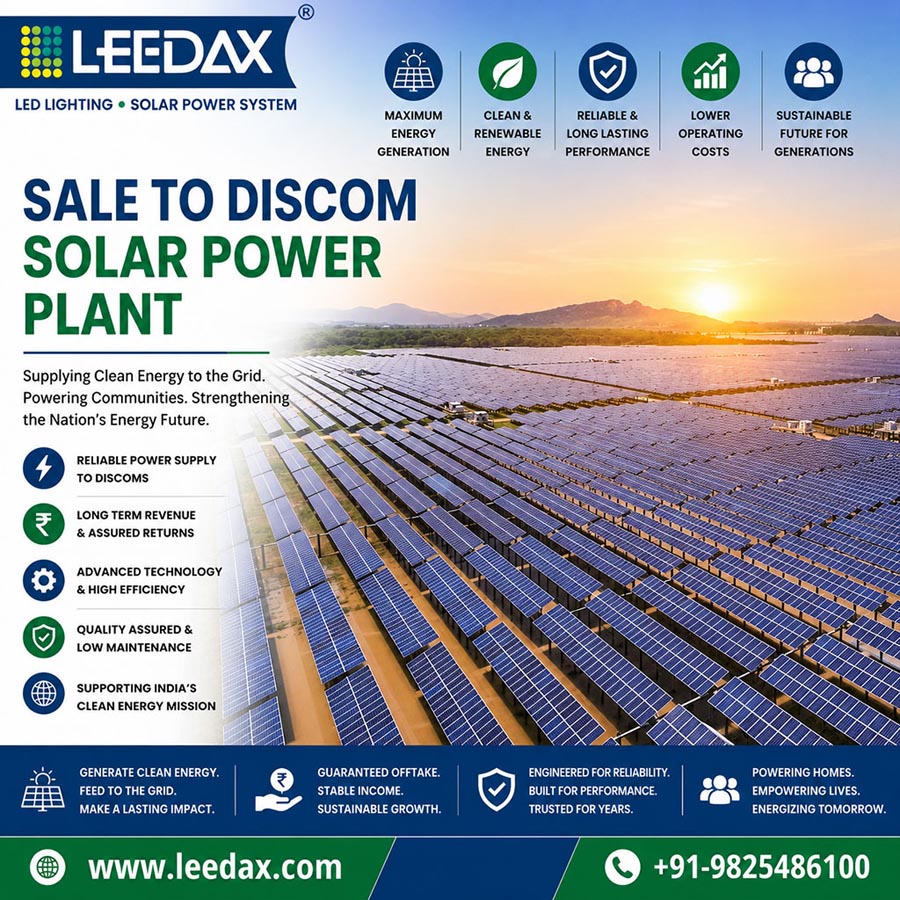
  • Large solar farms can supply renewable electricity to the grid through appropriately designed transmission and distribution infrastructure. Depending on the applicable project structure, solar plants can also support power purchase agreements, captive consumption arrangements or other permitted renewable-energy procurement models.
  • Utility-scale solar plants can be particularly suitable for regions with strong solar irradiation and adequate land availability. Large parcels of land can be developed into ground-mounted solar power plants, subject to land suitability, environmental considerations, grid connectivity and applicable approvals.
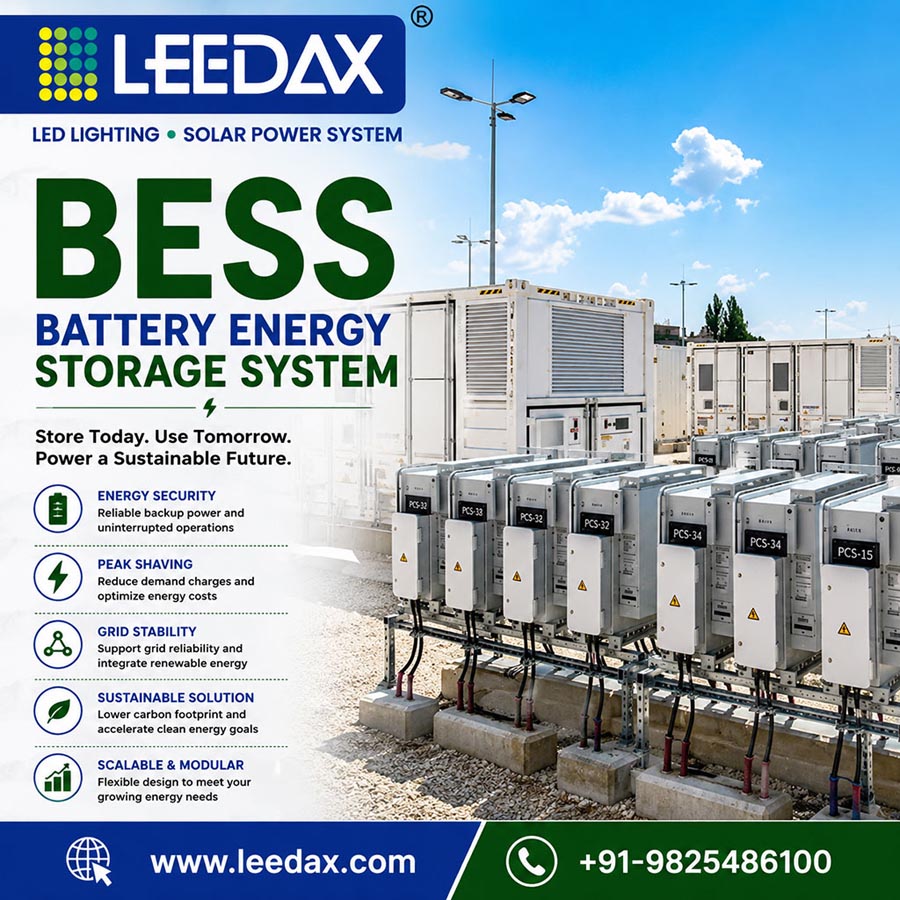
  • Solar PV projects can also be developed as part of renewable-energy parks or integrated clean-energy developments. In suitable cases, large-scale solar generation may complement other renewable-energy technologies and energy-storage systems.

Typical Applications Include:

  • Utility-Scale Solar Power Plants
  • Large Ground-Mounted Solar Farms
  • Grid-Connected Solar PV Projects
  • Renewable Energy Parks
  • Independent Power Producer Projects
  • Large-Scale Commercial Solar Projects
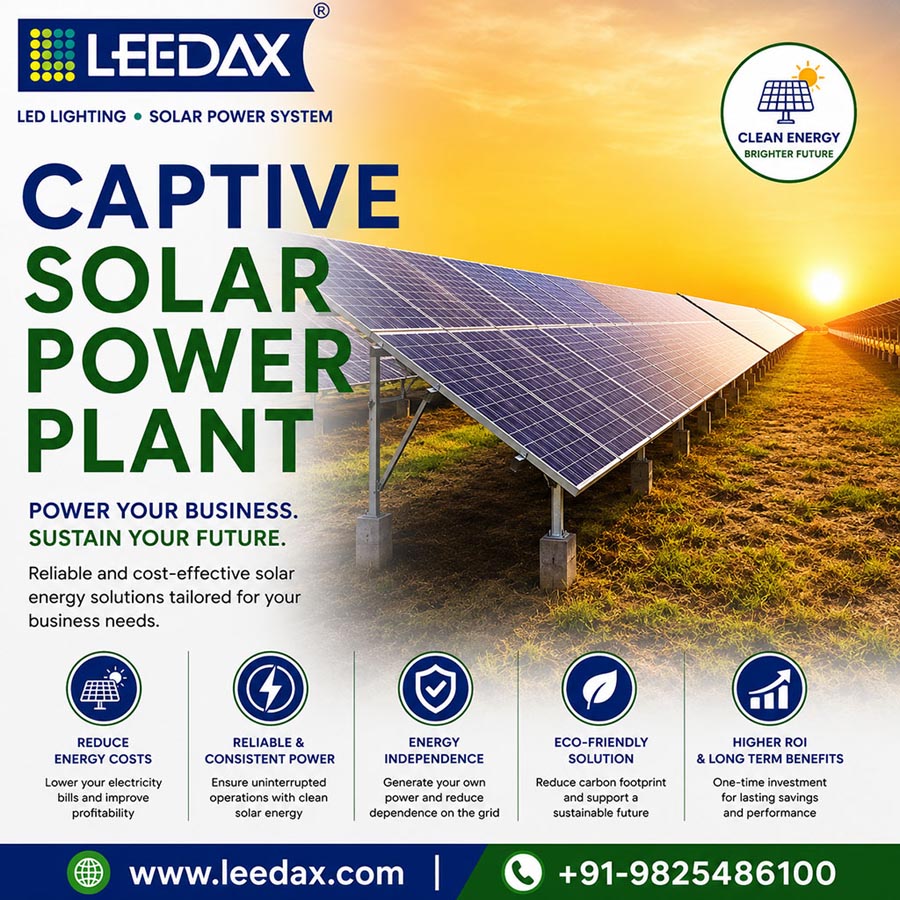
  • Captive Solar Power Projects
  • Group Captive Solar Projects, where applicable
  • Industrial Renewable Energy Projects
  • Solar Projects for Large Energy Consumers
  • Utility Renewable Energy Programs
  • Solar Power Generation for Grid Supply
  • Large Infrastructure Renewable Energy Projects
  • Solar Projects Integrated with Energy Storage
  • Large Renewable Energy Development Projects
Ground Mounted Solar Power Plant

Other Products